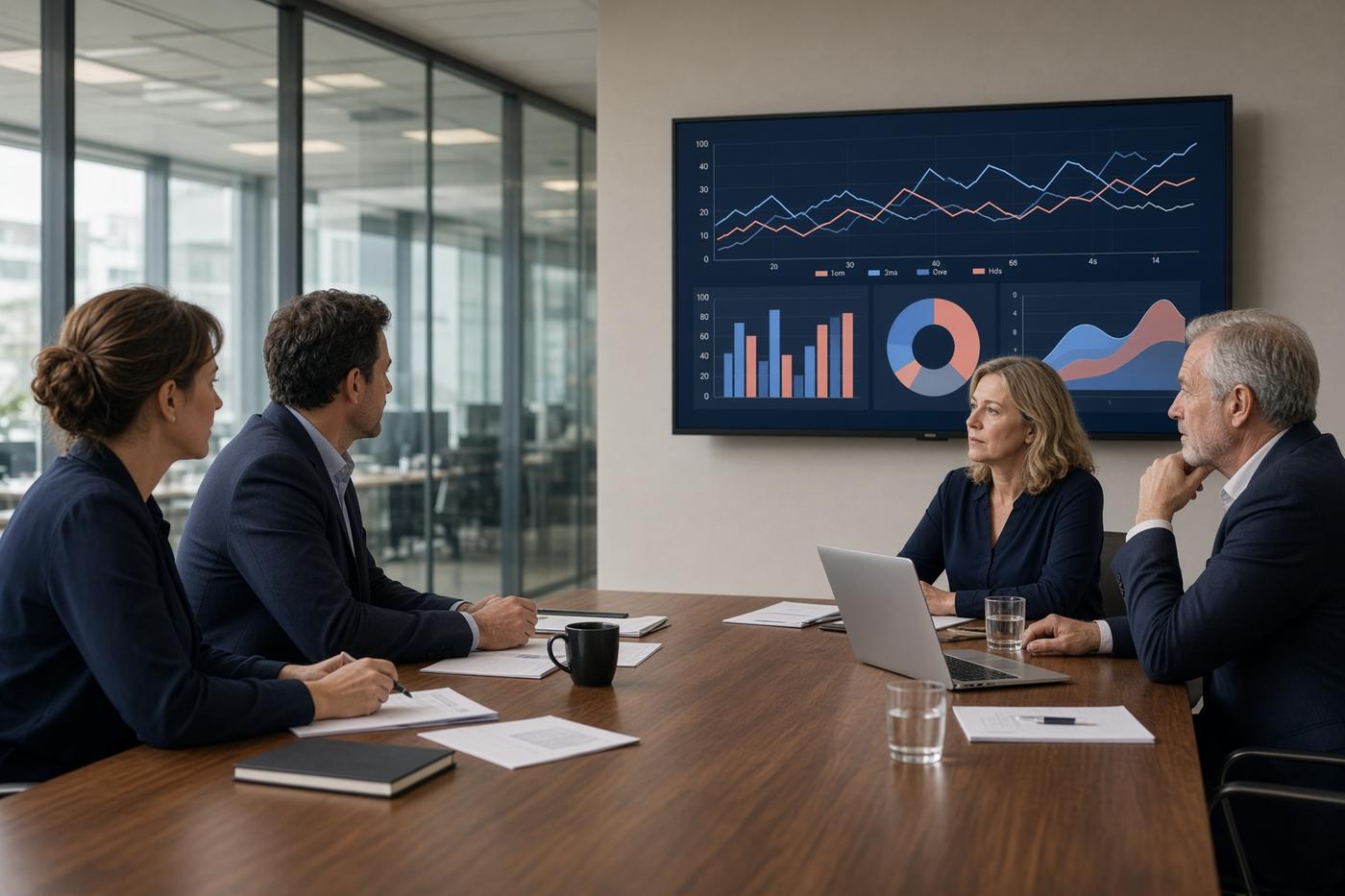

Four professionals in a UK boardroom looking toward an abstract risk screen

Case patterns

The kind of desk we are asked to build.

These are composite patterns of work, not advertisements for a named client and not a promise that your figures will move the same way. They describe the shape of the problem and the shape of the desk. Outcomes depend on your data, your owners and your willingness to retire a noisy alert.

A professional handshake in a glass meeting room

Pattern one · Regional financial services

Conduct clocks and operational breaks on one morning desk

A regional firm had a conduct pack, an incident log and a complaints ageing file. Each was honest. Together they were late. The Monday meeting spent its first half reconciling definitions of "open".

The desk we designed did not invent a new risk language. It showed three things the duty manager could defend: complaints past an internal clock, control breaks without an owner, and the age of each feed. The board view used the same definitions with the narrative stripped back to movement since last Friday.

What changed in the room was not a magic percentage. People stopped arguing about which spreadsheet was current. That is the result we will stand behind, and only after your own quiet-running weeks.
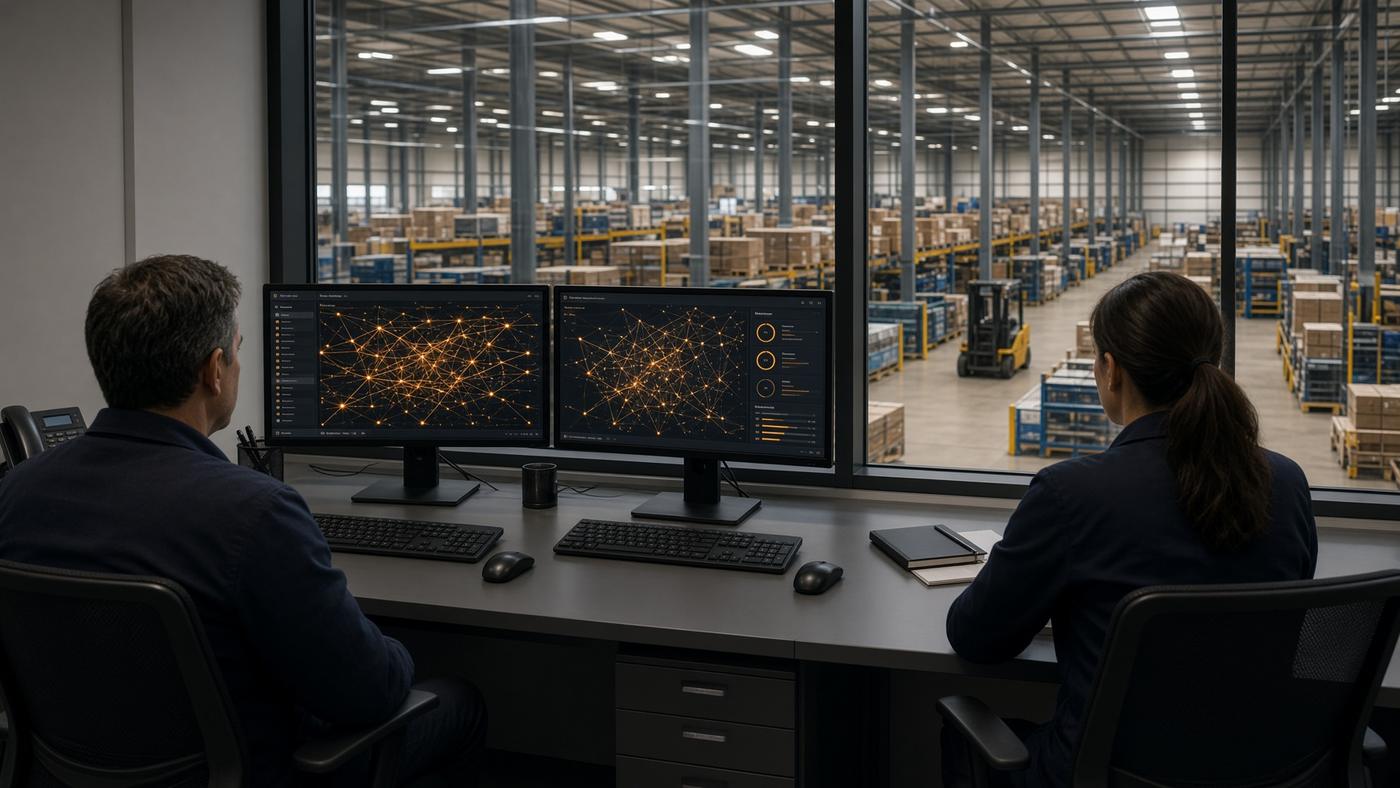

Pattern two · Midlands logistics

Supplier, yard and weather in the same glance

A multi-site logistics group could describe a bad day only after it had happened. Yard congestion, a late primary haulier and a weather warning lived in three tools and two group chats.

We refused a "risk score" for the network. Instead the desk shows concentration (how much of tomorrow depends on one supplier), delay against the promise already made to the customer, and which sites have a named deputy on the rota. Weather is labelled as context, not as an alert, unless it crosses a threshold the operations director wrote down.

The useful change was earlier conversation between the supplier owner and the site lead, while a diversion was still cheap.

Warehouse control room with amber status lighting
Night operator at a monitoring desk during rain

Pattern three · UK energy retail operations

Outage load and complaint clocks without a second spreadsheet

An energy retail operations team was reporting complaint ageing from an export that finished after the meeting had started. Outage volume sat in another system. Vulnerable-customer flags were a third list, handled carefully and separately, as they should be.

The dashboard did not merge those populations into a score. It gave the duty manager a clock, a volume, and a clear marker when a case required a specialist rather than a general queue. Access to the vulnerable-customer marker was limited to the roles already entitled to see it.

We will not publish their volumes. The pattern is the point: separate duties, one clock, no blended "customer risk" number.

If your pattern is quieter than these, that is fine.

A single risk officer and a tired spreadsheet is a complete brief. Bring the decision you are trying to make earlier. We will say if a dashboard is the wrong tool.

Request a review